
Toubkal trek guide: climbing North Africa's highest peak
Jebel Toubkal, at 4,167 m, is the highest mountain in North Africa and in the Atlas range. It rises about a two-hour drive from Marrakech, and in summer it is a non-technical walk that a fit beginner can do in two days. It is also a good first taste of altitude before bigger mountains like Kilimanjaro.
Updated 19 October 2026 · Written by the ElsewhereCo team
- Summit
- Jebel Toubkal, 4,167 m
- Where
- Toubkal National Park, High Atlas, Morocco
- Starting point
- Imlil village, about 1,740 m
- Usual length
- 2 days on foot, with a night at a mountain refuge
- Snow-free season
- Roughly June to October
The route from Imlil
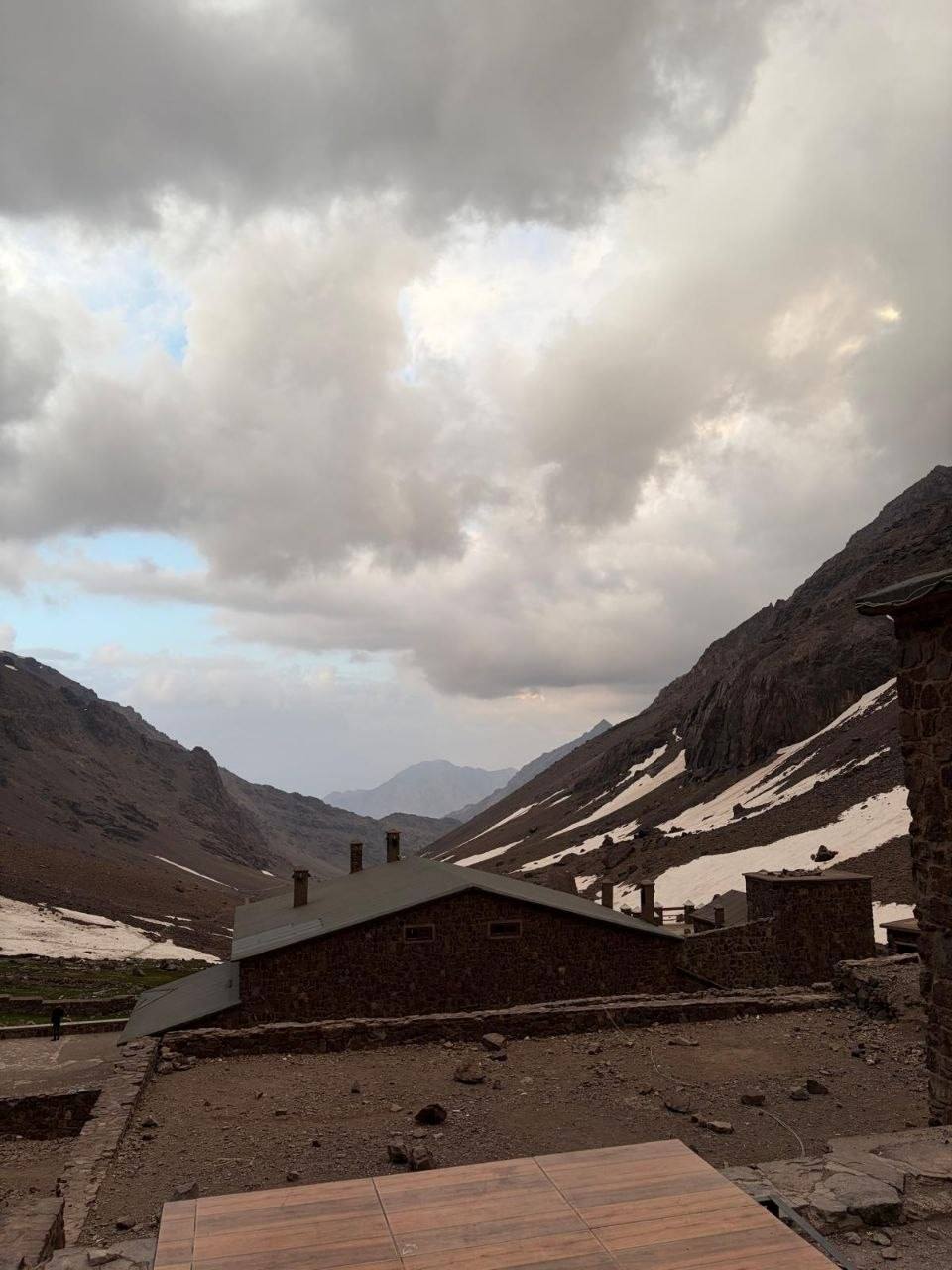
Almost everyone climbs the south side, starting in Imlil. On the first day the path climbs through the village of Aroumd and up the Mizane valley past the small shrine of Sidi Chamharouch, to the refuges at about 3,200 m. On our trips this is about 14 km and six hours of walking, while mules carry the bags.
On the second day you leave before sunrise and climb a steep, rocky slope to the summit ridge, about three to four hours up. The views reach across the Atlas and, on a clear day, the Sahara side. Then you walk back down to the refuge and on to Aroumd. It is a long day: on our programme about 22 km and ten to eleven hours, so the night after is in the village, not in Marrakech.
When to go
From about June to October the trail is usually free of snow and the climb is a hike. Mornings at the top are still cold, even when Marrakech is hot. From roughly November to April the upper mountain is under snow and ice, and the climb becomes a winter ascent that needs crampons, an ice axe and the experience to use them. Spring and autumn are cooler and quieter, but check snow conditions before you commit.
Altitude on Toubkal
Toubkal is lower than Kilimanjaro, but the ascent is fast: from Marrakech at around 460 m to a night at 3,200 m and the summit the next morning. Headaches and poor sleep at the refuge are common. Drink plenty, keep a steady pace and tell your guide if you feel unwell. Anyone whose symptoms get worse should go down rather than continue. Read our altitude sickness guide before the trip.
Guides and rules
Since the end of 2018, Moroccan authorities have required foreign trekkers in Toubkal National Park to go with a licensed mountain guide, and there are checkpoints on the main trails. Bring your passport. Rules can change, so check them shortly before you travel; on our trips, licensed guides and the paperwork are part of the plan.
What to bring
In summer you need sturdy hiking boots with good grip for the scree, a warm layer and a windproof jacket for the summit morning, a hat and gloves, sun protection, a headlamp for the pre-dawn start and at least two litres of water capacity. Trekking poles help a lot on the descent. A sleeping bag liner is useful at the refuge. See the equipment guide for each item.
Questions people ask about Toubkal
Is Toubkal hard to climb?
Do I need a guide for Toubkal?
How many days do I need for Toubkal?
Can beginners climb Toubkal?
Climb Toubkal with us
Seven days: Marrakech, the Atlas villages, the Toubkal summit and a day on the coast in Essaouira, with luggage carried by mules on the trek.